SEMINARIUM Z FIZYKI BIOLOGICZNEJ I BIOINFORMATYKI
Instytutu Biochemii i Biofizyki PAN, Instytutu Fizyki PAN,
i Zakładu Biofizyki UW
Wednesday, 24.06.2026, 15:15 (3.15 p.m. CET)
Institute of Physics, Polish Academy of Sciences
Al. Lotników 32/46, 02-668 Warsaw
Room 203
(turn left at the reception desk; second floor)
and
https://zoom.us/j/91976153012?pwd=azNiMWE4UnhPN3lRQlY2UHZHOXVkQT09
„Discovering antibiotics that block EF-Tu–dependent steps
of bacterial protein synthesis”
Prof. Włodzimierz Mandecki
Rutgers University – New Jersey Medical School
Newark, NJ, U.S.A.
Bogdan Lesyng (UW)
Anna Niedźwiecka (IF PAN)
Piotr Zielenkiewicz (IBB)
————————-
Meeting ID: 919 7615 3012
Passcode: 747922
One tap mobile
+48223073488,,91976153012#,,,,*747922# Poland
+48223987356,,91976153012#,,,,*747922# Poland
Dial by your location
+48 22 307 3488 Poland
+48 22 398 7356 Poland
+48 22 306 5342 Poland
————————-
ABSTRACT
There is a critical need for new antibiotics to treat bacterial infections caused by pathogens that are resistant to many, if not all, currently available drugs. Here, we present a method for identifying a prospective new antibiotic by first developing a dedicated assay and then using it for high throughput screening of a chemical compound library. The screen was designed to detect inhibition of the formation of the „ternary complex,” a structure essential for bacterial protein synthesis in all bacteria, composed of elongation factor Tu (EF-Tu), aminoacyl-tRNA, and GTP. The inhibitory compound, designated MGC-10, was effective against all Gram positive bacteria tested, including a wide variety of methicillin resistant Staphylococcus aureus (MRSA) strains. Although apparently too toxic for systemic use, the compound was safe and effective for topical treatment of skin infections in a mouse model. No resistance to the compound has been detected thus far, suggesting strong potential for treating infections caused by pathogens resistant to existing antibiotics.
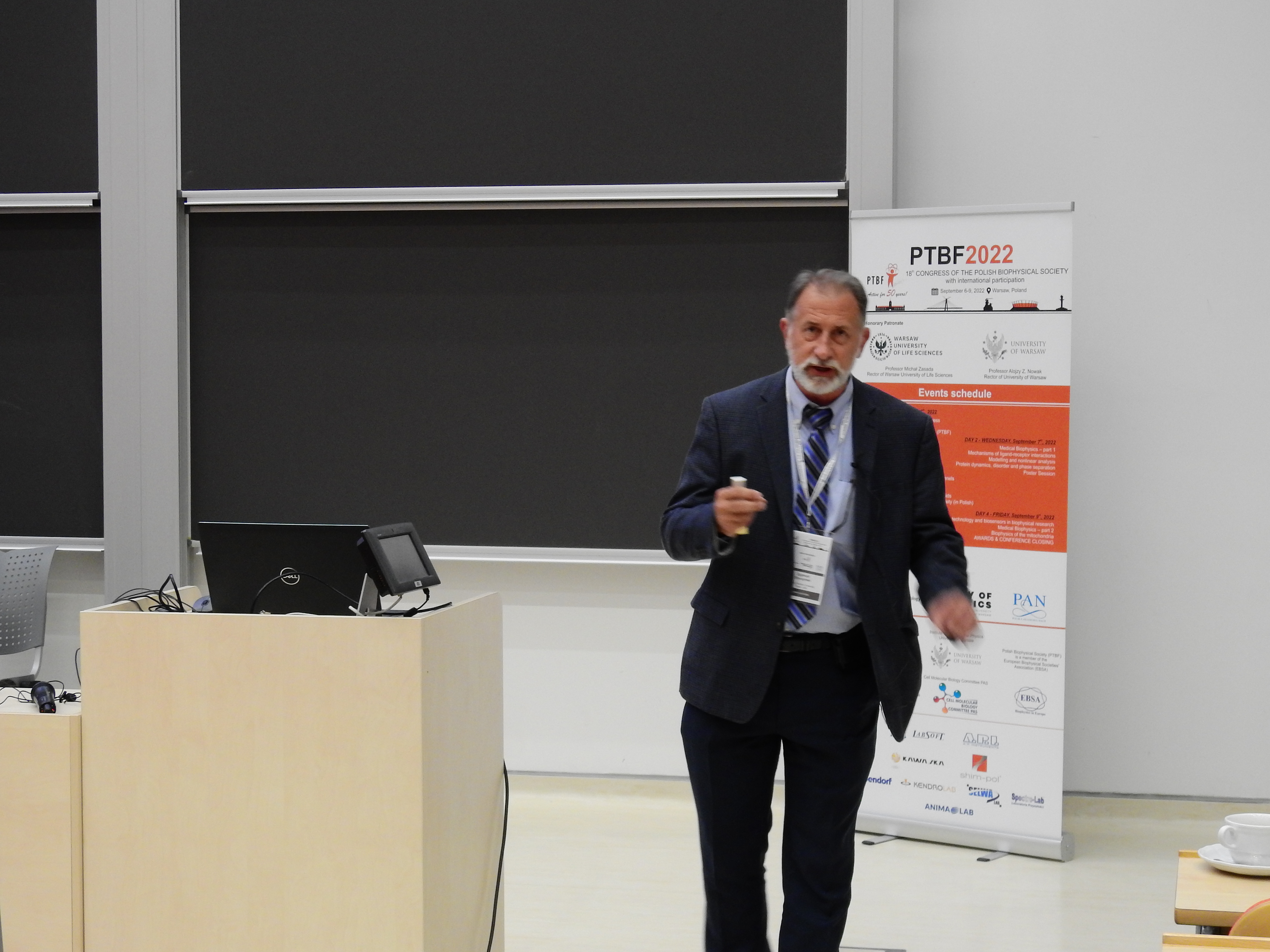
Dr. Włodek Mandecki is a 1975 graduate of the Faculty of Physics, Biophysics Section, at the University of Warsaw. He received his PhD in Biochemistry from the Institute of Biochemistry and Biophysics of the Polish Academy of Sciences (IBB PAN) in Warsaw. He worked at Abbott Laboratories in Chicago and later founded and directed the biotechnology company PharmaSeq, Inc. (now p Chip Corporation) located near Princeton, New Jersey. He is currently Adjunct Professor at Rutgers New Jersey Medical School in Newark, NJ.